Start of my aquaponic a system

Welcome to our community

Be a part of something great, join today!

magnifier661

B-A-N-A-N-A-S!
Joined
Oct 2, 2009
Messages
59,328
Likes
5,588
Points
113
This is only my home.

ImageUploadedByTapatalk1380666017.549543.jpg

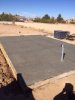
This is the foundation for the greenhouse.

ImageUploadedByTapatalk1380666077.687008.jpg

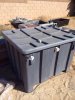
The 250 gallon fish tank

ImageUploadedByTapatalk1380666110.755465.jpg

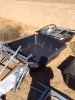
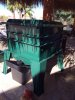
Grow beds and sump tank
 
I think he lives near Albuquerque New Mexico.
 
are you doing straight tilapia, or are you polyculturing with mussels/crawfish/etc?

I don't know Lancaster (I assume it gets hot there)...did you buy a chiller for the tank, and if so, how big? I'm working on calculations right now to see what the cost would be for each type of fish that I'd like to grow. In a tank small enough to get water chilled relatively inexpensively to 54 degrees or so, I don't think you can stock enough salmon to make it worthwhile (even just growing them out through their freshwater phase--which can take 18 months). Trout need to be in the 60's, and tilapia are best at 87. The industrial-strength chillers start at around $3k (and I don't have specs for cooling capacity yet), and that's without factoring in electricity. I've been playing around with using geothermal "cooling" to keep a tank relatively close to room temperature, and then chilling from there with some combination of solar and conventional power. But if you're just looking to use tilapia, you can probably get away with a basic, smaller chiller (or, to be honest, just dumping milk jugs of frozen water into the tank every day and re-freezing them).

Are you doing the vermiculture to sell the worms and compost, or are you going to implant the worms in a garden?

 
are you doing straight tilapia, or are you polyculturing with mussels/crawfish/etc?

I don't know Lancaster (I assume it gets hot there)...did you buy a chiller for the tank, and if so, how big? I'm working on calculations right now to see what the cost would be for each type of fish that I'd like to grow. In a tank small enough to get water chilled relatively inexpensively to 54 degrees or so, I don't think you can stock enough salmon to make it worthwhile (even just growing them out through their freshwater phase--which can take 18 months). Trout need to be in the 60's, and tilapia are best at 87. The industrial-strength chillers start at around $3k (and I don't have specs for cooling capacity yet), and that's without factoring in electricity. I've been playing around with using geothermal "cooling" to keep a tank relatively close to room temperature, and then chilling from there with some combination of solar and conventional power. But if you're just looking to use tilapia, you can probably get away with a basic, smaller chiller (or, to be honest, just dumping milk jugs of frozen water into the tank every day and re-freezing them).

Are you doing the vermiculture to sell the worms and compost, or are you going to implant the worms in a garden?


I have two media grow beds; which will house my worms. The compost I'm getting from my good scraps are going in my outdoor garden beds and house plants.

I will be growing tilapia only. I looked into mussels and it will be tough to grow in my climate. I can't fight Mother Nature; when the summer temps are +100. I will have a swamp cooler set up in my green house, and electric heaters for the winter (just need to keep ambient temps at 55 degrees).
 
Have you heard about using insect larva for fish meal?
 
I've been playing around with using geothermal "cooling" to keep a tank relatively close to room temperature

Is this piping water through copper tubes underground a long way?
 
Have you heard about using insect larva for fish meal?

Actually I was researching growing brine shrimp. It requires a small footprint, and you get tons of protein. You use clippings from your garden to supply other micro minerals needed for a healthy fish.
 
Actually I was researching growing brine shrimp. It requires a small footprint, and you get tons of protein. You use clippings from your garden to supply other micro minerals needed for a healthy fish.

This is the story providing me the only information I know on the subject. It seems RIGHT up your ally in the "make money in an open, unused" market.
 
Is this piping water through copper tubes underground a long way?

It's still only a figment that I've written down a couple places on paper, but basically it's just sinking a tank into the ground (ground temp in FL is about 71 year-round) and seeing what materials make sense to house the tank in that will give enough light to keep fish on a day/night cycle, keep the tank (and contents) at a max of 71-72, structural integrity/etc., and then using a cooler from there. Basically, what thermo is involved to ensure that heat input to the tank from the air/water interface can be mitigated by that from the tank/tank wall/ground interface? And then seeing if I can run supplemental cooling to keep it in the 50's for salmon (or 60's for trout). I don't know that anyone's really done cold-weather fish in a warm-weather environment (tilapia's pretty easy down here--not that I have the experience yet) and it's more just playing around with an idea. If (when?) I start mine up, it'll be tilapia-based at first while seeing which polycultures (mussels? freshwater prawns? Crawfish?) can co-exist between the tilapia and the hydroponic beds. But I think that if I could find a way to pull off freshwater salmon, it would be pretty profitable, as energy costs would probably be the big thing (I'm also looking into the physics behind solar panel-driven cooling systems, but I'm more leery of that b/c of solar efficiency coupled with high start-up cost).
 
It's still only a figment that I've written down a couple places on paper, but basically it's just sinking a tank into the ground (ground temp in FL is about 71 year-round) and seeing what materials make sense to house the tank in that will give enough light to keep fish on a day/night cycle, keep the tank (and contents) at a max of 71-72, structural integrity/etc., and then using a cooler from there. Basically, what thermo is involved to ensure that heat input to the tank from the air/water interface can be mitigated by that from the tank/tank wall/ground interface? And then seeing if I can run supplemental cooling to keep it in the 50's for salmon (or 60's for trout). I don't know that anyone's really done cold-weather fish in a warm-weather environment (tilapia's pretty easy down here--not that I have the experience yet) and it's more just playing around with an idea. If (when?) I start mine up, it'll be tilapia-based at first while seeing which polycultures (mussels? freshwater prawns? Crawfish?) can co-exist between the tilapia and the hydroponic beds. But I think that if I could find a way to pull off freshwater salmon, it would be pretty profitable, as energy costs would probably be the big thing (I'm also looking into the physics behind solar panel-driven cooling systems, but I'm more leery of that b/c of solar efficiency coupled with high start-up cost).

Hmm something I'd like to point out is that if you are trying to immerse your whole tank underground, then additionally cool said tank, you will at some point be fighting the earth wanting to heat the tank above 50F.
 
This is the story providing me the only information I know on the subject. It seems RIGHT up your ally in the "make money in an open, unused" market.


That's a pretty awesome piece! I'm not too sure I would want to get into growing insects though. I know they don't bother humans, but I like using just feed because of how cheap it is already. No need to harvest, just toss the feed into the tank.
 
That's a pretty awesome piece! I'm not too sure I would want to get into growing insects though. I know they don't bother humans, but I like using just feed because of how cheap it is already. No need to harvest, just toss the feed into the tank.

I understand, but I think their feed might be cheaper or at least better for the environment and make the fish taste better.
 
Hmm something I'd like to point out is that if you are trying to immerse your whole tank underground, then additionally cool said tank, you will at some point be fighting the earth wanting to heat the tank above 50F.

Exactly.
 

http://answers.yahoo.com/question/index?qid=20090706185049AAdL2hO

"While temperatures above ground change a lot from day to day and season to season, temperatures in the upper 10 feet of the Earth's surface hold nearly constant between 50 and 60 degrees Fahrenheit. For most areas, this means that soil temperatures are usually warmer than the air in winter and cooler than the air in summer. Geothermal heat pumps use the Earth's constant temperatures to heat and cool buildings. They transfer heat from the ground (or water) into buildings in winter and reverse the process in the summer."

Seems like if you dig down 10 ft +; your temp should be more manageable. If you can keep a constant of 50-60˚F; then chilling it a little lower maybe the trick.

Keep in mind that when you do this, then the plants must be accustomed to the lower temperatures. And usually those type of plants don't like excessive heat. Basically, having to use swamp coolers or A/C units to keep the greenhouse cool in the summer months.
 
http://answers.yahoo.com/question/index?qid=20090706185049AAdL2hO


Seems like if you dig down 10 ft +; your temp should be more manageable. If you can keep a constant of 50-60˚F; then chilling it a little lower maybe the trick.

Keep in mind that when you do this, then the plants must be accustomed to the lower temperatures. And usually those type of plants don't like excessive heat. Basically, having to use swamp coolers or A/C units to keep the greenhouse cool in the summer months.

There's an entire subset of plants that would be used in this aquaponics setup (broccoli being the most "normal" one), and one for the tilapia tank in a more normal situation. Like I said, right now is about finding out the problems and trying to engineer around as much as possible.
 
There's an entire subset of plants that would be used in this aquaponics setup (broccoli being the most "normal" one), and one for the tilapia tank in a more normal situation. Like I said, right now is about finding out the problems and trying to engineer around as much as possible.

Kale, Broccoli, cauliflower, Spinach, most lettuce, green beans and honeydew would work well in this system.

Also, you can use a gravity flow system, that pumps from your sump and grow raspberries (high dollar crop). Use an organic foliar feeder to add the extra nutrients. Small footprint, and you can add high dollar crops.

[video=youtube;He9JTA68VUI]
 
Kale, Broccoli, cauliflower, Spinach, most lettuce, green beans and honeydew would work well in this system.

Also, you can use a gravity flow system, that pumps from your sump and grow raspberries (high dollar crop). Use an organic foliar feeder to add the extra nutrients. Small footprint, and you can add high dollar crops.

[video=youtube;He9JTA68VUI]


that is so so so cool..does your pot taste like fish?
 

Users who are viewing this thread

Back
Top