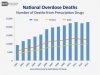
President Obama’s drug control priorities for the upcoming fiscal year include reducing prescription drug and heroin abuse by allocating additional funding to states with prescription drug monitoring programs (PDMPs), expanding and improving treatment for addicts, and spearheading efforts to make naloxone more readily available to first responders.
Announced this week,
Obama’s budget for fiscal year 2016 proposes more than $100 million in new investments for the
Department of Health and Human Services (HHS) to decrease the number of deaths involving prescription opioids and heroin.
According to the Centers for Disease Control (CDC), there were 16,235 deaths involving prescription opioids in 2013, an increase of 1% from 2012. The number of deaths involving heroin increased dramatically. There were 8,257 heroin-related deaths in 2013, up 39% from 2012. Total drug overdose deaths in 2013 hit 43,982, up 6% from 2012.
To improve PDMPs across the country, Obama wants to grow the size of regulatory and law agencies involved in collecting and analyzing controlled substance prescription data; assist the
Substance Abuse and Mental Health Services Administration (SAMHSA) with its Strategic Prevention Framework, a five-step process that outlines a prevention strategy within communities; and provide additional funding to the
Office of the National Coordinator (ONC) — with the hopes of enhancing prescription drug monitoring.
The Obama Administration’s 2016 strategy for treating individuals addicted to prescription opioids and heroin revolves around providing funding for early intervention support, treatment itself and recovery services. One example of this is expanding access to
Medication-Assisted Treatment (MAT), an approach that combines medications with counseling and behavioral therapies to treat prescription opioid use disorders (POUDs).
Increasing the use of naloxone, an opioid antagonist, is one way to reduce prescription opioid-related deaths in the United States — an initiative Obama supports. His administration believes more naloxone in the hands of first responders will prevent overdose deaths in high-risk communities. The
Clinton Foundation recently partnered with
Kaléo, a privately held pharmaceutical company, to make
naloxone more accessible to colleges and universities, public safety organizations and community organizations.
Recommended by Forbes
MOST POPULAR
Photos: The World's Top Universities 2015
ACTIVE CONVERSATION
Facebook Declines to Remove Page Vilifying Autistic People
Mercedes-BenzVoice: How Carbon Fiber Is Changing The Automotive Landscape
MOST POPULAR
Photos: 10 Smart Money Moves From Superstar Savers
MOST POPULAR
10 Questions You Should Ask In A Job Interview
Deaths Involving Opioids, Heroin Continue To Rise, Report Shows
What Is The Role Of Opioids In The Treatment Of Chronic Pain?
Clinton Health Matters Initiative Partners With Kaléo To Reduce Opioid-Related...
More Attention To Preventing Opioid-Overdose Deaths With Naloxone
Obama’s budget for fiscal year 2016 includes a total of $27.6 billion (a 4.7% increase from the year prior) to
support the administration’s drug control strategy, which places a focus on prevention and treatment instead of a “moral failing.”
Dr. Andrew Kolodny, who is the chief medical officer at
Phoenix House, a drug treatment provider, hasn’t had much confidence in Obama’s efforts to curb overdose deaths related to prescription opioids and heroin.
“The response from President Obama to this crisis is shameful,” Kolodny said in a
previous interview. “I wouldn’t mind so much that he doesn’t speak about the problem if his agencies were working together to control the problem and if he was allocating the appropriate resources. But that’s not happening.”
A few weeks later, Kolodny’s opinion on Obama’s strategy for tackling prescription opioid and heroin abuse changed — just a bit. “For the first time, his administration is allocating significant funding for the opioid crisis,” he told Forbes. “I’m pleased to finally see this, but it’s very little, very late and only a small portion of the $100 million is for expanding access to opioid treatment addiction.”
“Until treatment, especially in communities hit hardest by the epidemic, is easier to access than pills or heroin, overdose deaths will remain at historically high levels and heroin will continue flooding in,” Kolodny said.
Bob Twillman, executive director of the
American Academy of Pain Management, in an interview told Forbes that more needs to be done to effectively combat prescription opioid and heroin abuse in the country, even though Obama’s initiatives have merit.
“I think what happens is when people go to the doctor now and they have pain, the first response for most prescribers and many doctors is okay, let me write you a prescription,” he said. “I think there are a lot of other things we can do besides write prescriptions that will help people with their pain — and that’s especially true for people who have chronic pain.”
There are alternatives to ingesting prescription opioids for pain
management: accupuncture, chiropractic, psychotherapy and physicial therapy. Twillman believes expanding access and providing reimbursement for these other methods will bring down prescription opioid abuse. But in order for this to happen, prescribers will need to become better educated on alternatives to prescription opioids for pain management, he noted.