
How low will California fall?

Welcome to our community

Be a part of something great, join today!

Nuclear power-plants will be even cheaper than that...

The technology is there, but for some reason, politically it's not OK to build them but it's OK to send people to fight in Iraq...

Common sense for most people. Better that people die over there than build death plants here. Power plants around the world are decaying and in a few decades meltdowns will be as common as the seasons.
 
A nuclear power plant costs a lot to build in the USA. Perhaps $20B these days.

The cost of Iraq and Afghanistan combined might have built 50 nuclear reactors over 10 years. Hardly the number we'd need.

The US today has around 70 nuclear power plants, the last one built in 1977 (yikes) - many of them are tiny by modern standards, and yet, 20% of the electricity in the US is nuclear based despite the use of outdated, not really state of the art facilities...

I think you have to rethink what 50 modern nuclear plants will do for this country...

The problem with your last statement is that burning oil (and coal) is hugely economical compared to the alternatives. Otherwise the alternatives would have already won. We're talking maybe 50x more economical.

Burning oil is not really more economical than electric-transportation for most everyday uses by Americans, the reason that petroleum based transportation was not challenged before was the issue of batteries - as far as storage and safety. We are finally at a place in time where the technology is there to make a serious dent in the IC dominance in this area.

As for coal burning - nuclear generation is actually cheaper - but for political reasons it has not been expanded for many years in this country. I would again remind you that in this country, the last nuclear-power plant that was built was finished when Jimmy Carter became president. In comparison - France manufactures 75% of it's electric energy via nuclear power-plants and France is the world's largest net exporter of electricity due to its very low cost of generation, and gains over 3 billion Euros per year from this.
 
I'm already sold on nuclear power.

I'm not sold on a 40 mile range vehicle when I might want to go 41 on some days or 80 or whatever. I think that will be the huge resistance to all electric vehicles unless they're as cheap as gas fueled cars, get the same kind of range (300+ miles to a tank), and don't take several hours to refill (gas station takes 5 minutes to refill a car).

Do you realize the life expectancy of a nuclear power plant is about 30-40 years? We don't have to build 50 MORE plants, we need to build 70 to replace the old ones and then 50 more. Or more like 300 more so we can stop burning coal and still have extra capacity to plug in more electronic gadgets.
 
And there you made my argument for me. We already spend tons of money on a losing proposition with the foreign oil dependency. It only makes sense to transition to something else and move that investment where it will build our infrastructure, create jobs and investment in-house and develop technology that can later be exported...

We don't actually. We have some of the cheapest gas prices here in the US, and it's doubtful an equivalently economic electric option will EVER be available to the masses. That technology is so far off the idea will probably be made obsolete by something better soon.

You are talking about pennies when you talk about how much of that $3.25 per gal even makes it to the oil supplier, whether he/she is Arab or American. Nearly all the cost to you comes from the US or British processor, and Federal, State and Local taxes.
 
Vast majority? LOL.

The average American driver covers 33.4 miles per day - which is within the range of a single charge. Given that the US also has many people that drive long-distance, the vast majority is right on the money. LOL as much as you want, it's the truth.

So, you're an isolationist that opposes free trade between countries?

No, but I also do not think it makes sense to be dependent on the whims of dictators in far-away places that can always wave the threat of cutting you off to get whatever they want.

I'd much rather have oil wells being drilled in the Venezuela than more dams and nuke plants built in America.

Until they decide that they are once again happy with $100 per barrel - and later $120 and later $140 and this country never gets out of the recession because it has to dance as a puppet...

Most sane people would like to see the filthy practice of burning it banned, which will eventually happen. Proposing to increase the burning of coal by tenfold or whatever absurd number would be required to run America's cars is naive at best.

Actually you got it wrong again. It is much easier to create clean burn when you do it on a massive scale as you do in the power-plants than when you do it on millions of small power-plants in cars.

Most ozone pollution is caused by motor vehicles, which account for 72% of nitrogen oxides and 52% of reactive hydrocarbons (principal components of smog) - Emissions from cars dwarfs that from power plants - for example, the power-plant that serves Austin, TX and the Travis county creates around 1000 tons per year of NOX, the cars registered in this county create 30,000 tons per year... Replacing the IC engines with coal burning electricity is very, very green...
 
Last edited:
This state is almost comically bad. Just saw a flash on my twitter feed that the CA supreme court decided that illegals can get in-state tuition at california colleges. WTF. Jerry Brown will continue these kind of policies.

I think it will be pretty brutal in the next 5 years here. The state government is totally corrupt and they push these liberal policies that are going to fall flat on their ass. The pension system is a huge time-bomb and is unsustainable.

I see zero chance of recovery for this state. Bankruptcy and then a federal bailout is the only thing that's going to happen here. treading water.

Are you talking about Oregon, or California?
 
I'm not sold on a 40 mile range vehicle when I might want to go 41 on some days or 80 or whatever. I think that will be the huge resistance to all electric vehicles unless they're as cheap as gas fueled cars, get the same kind of range (300+ miles to a tank), and don't take several hours to refill (gas station takes 5 minutes to refill a car).

The Leaf gives you a 100 miles range, and the Volt gives you that 300 miles range - but most of the time you will not use the gasoline...

If you do drive normally, you will have maybe 10 days of the month where you will go over the charge range - and after that you will have comparable gasoline costs as a normal car, but for the other 20 days, you will have somewhere between 1/2 and a 1/3 of the cost. It is already cheaper at a very early stage of the development...

Do you realize the life expectancy of a nuclear power plant is about 30-40 years? We don't have to build 50 MORE plants, we need to build 70 to replace the old ones and then 50 more. Or more like 300 more so we can stop burning coal and still have extra capacity to plug in more electronic gadgets.

What does this have to do with anything? This is just maintenance of existing infrastructure which is done anyway, it has nothing to do with moving the price of police actions to investments in new infrastructure to move to better/modern technologies and lessen dependency.

BTW, most nuclear plants in the US have their licenses extended to 60 years now - because, as mentioned above, the last time one was built in this country was 1977 - 34 years ago...
 
Last edited:
Are you talking about Oregon, or California?

California. This Global Warming Solutions Act that Arnie and the dems passed is going to cripple economic growth for the next decade+ (well, until they eventually repeal it).
 
The average American driver covers 33.4 miles per day - which is within the range of a single charge. Given that the US also has many people that drive long-distance, the vast majority is right on the money. LOL as much as you want, it's the truth.
...

I've never met him (the average American), but since 7 days a week he drives exactly 33.4 miles, not 12 miles on workdays and 170 miles on weekend trips, it sounds like if they ever make a fairly priced electric car he might buy one. I don't know anyone with a car who could rely on an electric as the only family vehicle. A city-dwelling childless person maybe. And then there's the actual gutless piece of tin you get for a whole lot of money, and it is dangerous as hell if you get hit in it. And when the power grid fails, as happens on occasion, you'd be stuck without a ride.

I want a perpetual-motion transport powered by happy thoughts.
 
In comparison - France manufactures 75% of it's electric energy via nuclear power-plants and France is the world's largest net exporter of electricity due to its very low cost of generation, and gains over 3 billion Euros per year from this.

Sounds like you should move to France.
 
Due to historic activities typically related to radium industry, uranium mining, and military programs, there are numerous sites that contain or are contaminated with radioactivity. In the United States alone, the Department of Energy states there are "millions of gallons of radioactive waste" as well as "thousands of tons of spent nuclear fuel and material" and also "huge quantities of contaminated soil and water." Despite copious quantities of waste, the DOE has stated a goal of cleaning all presently contaminated sites successfully by 2025. The Fernald, Ohio site for example had "31 million pounds of uranium product", "2.5 billion pounds of waste", "2.75 million cubic yards of contaminated soil and debris", and a "223 acre portion of the underlying Great Miami Aquifer had uranium levels above drinking standards." The United States has at least 108 sites designated as areas that are contaminated and unusable, sometimes many thousands of acres. DOE wishes to clean or mitigate many or all by 2025, however the task can be difficult and it acknowledges that some may never be completely remediated. In just one of these 108 larger designations, Oak Ridge National Laboratory, there were for example at least "167 known contaminant release sites" in one of the three subdivisions of the 37,000-acre (150 km2) site. Some of the U.S. sites were smaller in nature, however, cleanup issues were simpler to address, and DOE has successfully completed cleanup, or at least closure, of several sites."

http://en.wikipedia.org/wiki/Radioactive_pollution
 
Chernobyl was a military grade reactor with few of the safeguards we build into the reactors here in the USA.

We have regulations against reprocessing nuclear waste that need to be repealed. France is the model to follow when it comes to nuclear power. The people there are not afraid of it or of having a reactor in their back yard. They've had no accidents. They reprocess their fuel and encase the final waste products in a kind of glass that can survive train collisions and being dropped from airplanes.
 
Sounds like you should move to France.

Not likely. Other than Paris - I found the people there to be as rude as those in beautiful central Oregon... ;)

J/K - but really, it makes no sense not to pay attention what is happening in the world and see where there are ideas that work and where there are ideas that do not. I am not an isolationist , you know ;)

BTW - direct nuclear power-plant related deaths in the USA since the first plant was opened stands at 7 (over more than 50 years) + additional 430 infants death for the Three Mile Island incident of 1979. In comparison, the American lung association puts the tally of pollution related death in the us at 70,000 annually (thats as much as breast cancer and prostate cancer combined each year).

Fear of nuclear reactors is the same as fear of commercial flying - un-logical, but understandable.
 
Last edited:
I've never met him (the average American), but since 7 days a week he drives exactly 33.4 miles, not 12 miles on workdays and 170 miles on weekend trips, it sounds like if they ever make a fairly priced electric car he might buy one. I don't know anyone with a car who could rely on an electric as the only family vehicle. A city-dwelling childless person maybe. And then there's the actual gutless piece of tin you get for a whole lot of money, and it is dangerous as hell if you get hit in it. And when the power grid fails, as happens on occasion, you'd be stuck without a ride.

You understand that the Volt has a gasoline engine that recharges the batteries when you go out of range, making your entire argument invalid? There is no range issue compared to a normal IC powered car - you are just going to operate the car at a much cheaper rate on average. When the Volt runs on gasoline to recharge it's batteries, it gets 37 MPG (excellent for a big car, thanks to the fact that the IC engine does not run the drivetrain - so it can be optimized for efficiency without dealing with starting and stopping) - but when you put the normal use - it's MPG-e (equivalent) comes to 99MPG which is fantastic...

I want a perpetual-motion transport powered by happy thoughts.

A Sergio in every car would be fantastic, I agree.
 
You understand that the Volt has a gasoline engine that recharges the batteries when you go out of range, making your entire argument invalid? There is no range issue compared to a normal IC powered car - you are just going to operate the car at a much cheaper rate on average. When the Volt runs on gasoline to recharge it's batteries, it gets 37 MPG (excellent for a big car, thanks to the fact that the IC engine does not run the drivetrain - so it can be optimized for efficiency without dealing with starting and stopping) - but when you put the normal use - it's MPG-e (equivalent) comes to 99MPG which is fantastic...


A Sergio in every car would be fantastic, I agree.

Let us know when you buy a Volt. As long as you drive a regular gas engine, I'll take my advice from someone else.
 
Let us know when you buy a Volt. As long as you drive a regular gas engine, I'll take my advice from someone else.

I do not drive much at all as I mostly work from home, but I would certainly be interested in an electric vehicle for commuting if my situation changes. I will keep you updated, per your request, however.

You do understand that there is a difference between my immediate situation or recommendation for anyone specific and understanding the long-term situation and it's ramifications and hoping the country does not just puts it's head in the sand and hope that the energy issues will auto-magically resolve themselves, I hope...
 
I do not drive much at all as I mostly work from home, but I would certainly be interested in an electric vehicle for commuting if my situation changes. I will keep you updated, per your request, however.

With the current state of EV, why?
 
With the current state of EV, why?

Because I find modern cars to be mostly boring and appliance like as is. Can't think of a single new car I want to own. If I need to commute for real (ugh) I might as well get a real appliance with as little as possible to take care of and cheap operating costs instead of putting miles on my classic cars and have them deal with traffic, heating and the like. I probably would not get a Volt as it is too big for my needs and wants - but the Leaf is interesting for short-range commute (wish it was smaller), an electric motorcycle for commuting could be interesting as well.

I suspect we will see some of the better super-minis from Europe as EV cars sooner or later - and this is what would probably make it interesting to me as a commuter. Small, easy to park, cheap to buy and operate. A Tata Indica is probably the first mainstream application of that - that we will see, doubt we will see it in the US anytime soon - but would not be surprised to see it in Europe in a year or two. If GM decides to put the Volt drive-train (which is brilliant, technically) into a smaller car like the Cruse or the upcoming Sonic - that would be what I would look at.

Of course, if I am lucky, I will not have to commute at all. I do not like it the 2 - 3 weeks a year I need to do that...
 
Chernobyl was a military grade reactor with few of the safeguards we build into the reactors here in the USA.
We have regulations against reprocessing nuclear waste that need to be repealed. France is the model to follow when it comes to nuclear power. The people there are not afraid of it or of having a reactor in their back yard. They've had no accidents.

Bald-faced lies.

There have been 99 major nuclear accidents reported since 1952. 56 of these have been in the US. France has reported 10. Common sense says that any accident not witnessed by the public would probably be hushed up and not reported, so we have no clue as to how many smaller ones happen or how frequently.

France is one of the most dangerousely radioactive areas in the world because they HAVE had numerous accidents and spills and leaks. Their water table is so polluted from it that we'll be seeing their entire populace developing mutations and dying off from radiaation sickness in the coming decades. Eventually, every country's nuke waste ends up in the oceans where it will systematically destroy the food chain.

http://en.wikipedia.org/wiki/Nuclear_accidents_by_country#France

http://naturalscience.com/ns/news/ns_news3.html

http://unjobs.org/tags/radioactive-pollution

http://archive.greenpeace.org/majordomo/index-press-releases/1998/msg00190.html

http://antinuclear.net/2010/03/17/frances-nuclear-industry-not-safe-not-clean/

http://www.studentsguide.in/biology...ctive-measures-for-radioactive-pollution.html

http://toxicswatch.blogspot.com/2009/02/germany-discovers-indias-radioactive.html

http://www.highbeam.com/doc/1G1-128589895.html
 
They reprocess their fuel and encase the final waste products in a kind of glass that can survive train collisions and being dropped from airplanes.

Can they survive being shot into space?

Ed O.
 
The gravey train is over and if they can't make this budget cut CA is doomed to fail.
 
Bald-faced lies.

There have been 99 major nuclear accidents reported since 1952. 56 of these have been in the US. France has reported 10. Common sense says that any accident not witnessed by the public would probably be hushed up and not reported, so we have no clue as to how many smaller ones happen or how frequently.

France is one of the most dangerousely radioactive areas in the world because they HAVE had numerous accidents and spills and leaks. Their water table is so polluted from it that we'll be seeing their entire populace developing mutations and dying off from radiaation sickness in the coming decades. Eventually, every country's nuke waste ends up in the oceans where it will systematically destroy the food chain.

http://en.wikipedia.org/wiki/Nuclear_accidents_by_country#France

http://naturalscience.com/ns/news/ns_news3.html

http://unjobs.org/tags/radioactive-pollution

http://archive.greenpeace.org/majordomo/index-press-releases/1998/msg00190.html

http://antinuclear.net/2010/03/17/frances-nuclear-industry-not-safe-not-clean/

http://www.studentsguide.in/biology...ctive-measures-for-radioactive-pollution.html

http://toxicswatch.blogspot.com/2009/02/germany-discovers-indias-radioactive.html

http://www.highbeam.com/doc/1G1-128589895.html

http://en.wikipedia.org/wiki/List_of_civilian_nuclear_incidents
 
I'm sure they could. They could at least be safely buried in Yucca Mountain.

Good luck with that. And harm the most expensive hole in the world?

Environmentalists are often their own worst enemies...
 
I lived less than 100 miles from Yucca Mountain, and I was totally in favor of using it to store waste. There's near 0" of rain a year, and a constant temperature (underground). Ideal conditions.
 
I lived less than 100 miles from Yucca Mountain, and I was totally in favor of using it to store waste. There's near 0" of rain a year, and a constant temperature (underground). Ideal conditions.

Be as it may be - I am pretty sure that the Obama administration pulled the plug on the facility last year (while expressing his support for new nuclear power-plants - brilliant). Seems like big-government really did well on that great hole in the ground. A true waste and a real problem with this country is that some of the interest groups just are not willing to compromise. It's the same with the right and the left, but in this case the environmentalists really shot themselves in the foot here - where they block a good solution to pollution issues for the Yucca Mountain environmental concerns.

You always need to pay for your lunch, but it seems that no-one is willing to do that and sooner or later it will come to bite them in the rear...
 
100 miles from Yucca Mountain is, IMO, beautiful desert landscape and wildlife and plants like you don't see anywhere else. Sure, there's lots of it, but Alaska is a really big place, too. So the environmentalists want to cover the desert (where nobody goes, but the wildlife!) with mirrors and solar panels, but won't let a teeny bit of Alaska be explored for oil that might tide us over until the reactors can be built and something practical comes along to take advantage.

Or the old Ted Kennedy thing - lobbied the local government to prevent windmill farm from being put in near his mansion because it would affect his view.

Or they take the land that is doing fine growing food for people and the animals we eat to grow stuff to turn into ethanol, which can't be easily transported, and the result of all that was to jack up food prices and cause worldwide shortages.

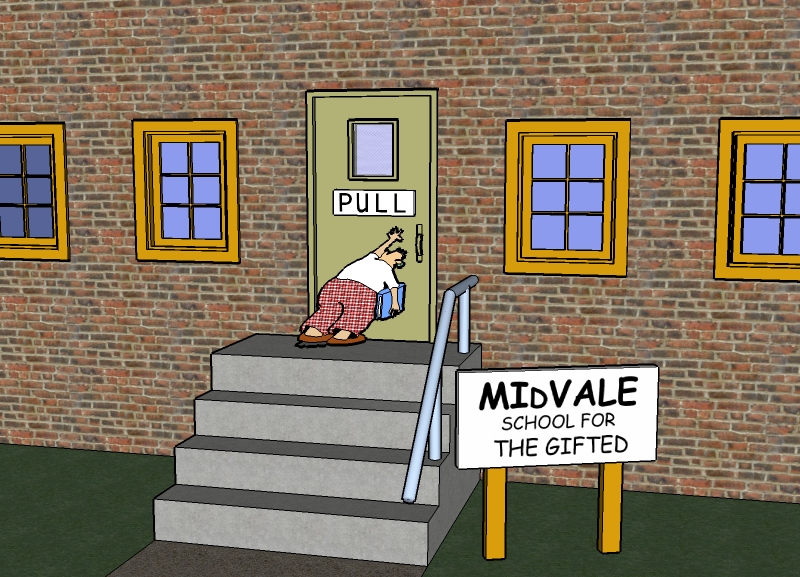
far-side-school-for-gifted.jpg
 
I do not drive much at all as I mostly work from home, but I would certainly be interested in an electric vehicle for commuting if my situation changes. I will keep you updated, per your request, however.

You do understand that there is a difference between my immediate situation or recommendation for anyone specific and understanding the long-term situation and it's ramifications and hoping the country does not just puts it's head in the sand and hope that the energy issues will auto-magically resolve themselves, I hope...

I do understand. It's "do as I say, not as I do".
 

don't forget these...

http://en.wikipedia.org/wiki/List_of_civilian_nuclear_accidents

http://en.wikipedia.org/wiki/List_of_civilian_radiation_accidents

http://en.wikipedia.org/wiki/List_of_military_nuclear_accidents


Illegal dumpingMain article: Radioactive waste dumping by the 'Ndrangheta
Authorities in Italy are investigating a 'Ndrangheta mafia clan accused of trafficking and illegally dumping nuclear waste. According to a turncoat, a manager of the Italy’s state energy research agency Enea paid the clan to get rid of 600 drums of toxic and radioactive waste from Italy, Switzerland, France, Germany, and the US, with Somalia as the destination, where the waste was buried after buying off local politicians. Former employees of Enea are suspected of paying the criminals to take waste off their hands in the 1980s and 1990s. Shipments to Somalia continued into the 1990s, while the 'Ndrangheta clan also blew up shiploads of waste, including radioactive hospital waste, and sending them to the sea bed off the Calabrian coast.[58] According to the environmental group Legambiente, former members of the 'Ndrangheta have said that they were paid to sink ships with radioactive material for the last 20 years.[59]

[edit] Accidents involving radioactive wasteMain article: Nuclear and radiation accidents
A number of incidents have occurred when radioactive material was disposed of improperly, shielding during transport was defective, or when it was simply abandoned or even stolen from a waste store.[60] In the Soviet Union, waste stored in Lake Karachay was blown over the area during a dust storm after the lake had partly dried out.[61] At Maxey Flat, a low-level radioactive waste facility located in Kentucky, containment trenches covered with dirt, instead of steel or cement, collapsed under heavy rainfall into the trenches and filled with water. The water that invaded the trenches became radioactive and had to be disposed of at the Maxey Flat facility itself. In other cases of radioactive waste accidents, lakes or ponds with radioactive waste accidentally overflowed into the rivers during exceptional storms.[citation needed] In Italy, several radioactive waste deposits let material flow into river water, thus contaminating water for domestic use.[62] In France, in the summer of 2008 numerous incidents happened;[63] in one, at the Areva plant in Tricastin, it was reported that during a draining operation, liquid containing untreated uranium overflowed out of a faulty tank and about 75 kg of the radioactive material seeped into the ground and, from there, into two rivers nearby;[64] in another case, over 100 staff were contaminated with low doses of radiation.[65]

Scavenging of abandoned radioactive material has been the cause of several other cases of radiation exposure, mostly in developing nations, which may have less regulation of dangerous substances (and sometimes less general education about radioactivity and its hazards) and a market for scavenged goods and scrap metal. The scavengers and those who buy the material are almost always unaware that the material is radioactive and it is selected for its aesthetics or scrap value.[66] Irresponsibility on the part of the radioactive material's owners, usually a hospital, university or military, and the absence of regulation concerning radioactive waste, or a lack of enforcement of such regulations, have been significant factors in radiation exposures. For an example of an accident involving radioactive scrap originating from a hospital see the Goiânia accident.


http://en.wikipedia.org/wiki/Nuclear_waste_disposal#Accidents_involving_radioactive_waste
 

Users who are viewing this thread

Back
Top